A car’s cooling system plays a critical role in keeping the engine at a safe operating temperature. Without it, engines would overheat within minutes, leading to serious damage and costly repairs.
In this guide, we’ll break down how a car cooling system works, explain each major component, and help you understand why proper cooling is essential for engine health.
Why Cars Need a Cooling System
When an engine runs, it produces a massive amount of heat due to combustion and friction. While some heat is necessary for efficient operation, too much heat can warp metal components, damage gaskets, and cause engine failure.
The cooling system:
Absorbs excess heat from the engine
Transfers that heat away safely
Maintains an optimal temperature range
Main Components of a Car Cooling System
A modern car cooling system is made up of several key parts working together.
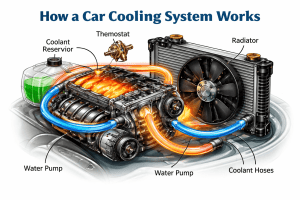
Radiator
The radiator is responsible for releasing heat absorbed by the coolant. As coolant flows through thin metal tubes, air passing through the radiator cools it down.
Coolant (Antifreeze)
Coolant is a specially formulated liquid that absorbs engine heat and resists freezing or boiling in extreme temperatures.
“If you’re looking for affordable universal coolant or replacement radiators, some vehicle-compatible options are available on AliExpress.”
Water Pump
The water pump circulates coolant throughout the engine and radiator. Without it, coolant would not flow, and the engine would overheat quickly.
Thermostat
The thermostat regulates when coolant flows to the radiator. It stays closed when the engine is cold and opens once the engine reaches operating temperature.
Cooling Fans
Cooling fans help pull air through the radiator, especially when the car is idling or moving slowly.
Hoses & Reservoir
Rubber hoses carry coolant between components, while the coolant reservoir allows for expansion as temperatures change.
How the Cooling System Works (Step by Step)
The engine heats up during operation
Coolant absorbs heat from the engine block
The water pump circulates hot coolant to the radiator
Airflow cools the coolant inside the radiator
Cooled coolant flows back into the engine
The cycle repeats continuously
This closed-loop system ensures consistent temperature control.
Common Cooling System Problems
Even well-maintained systems can develop issues over time.
Typical problems include:
Coolant leaks
Faulty thermostat
Broken water pump
Radiator clogs
Cooling fan failure
Signs Your Cooling System Isn’t Working Properly
Watch for these warning signs:
Temperature gauge rising higher than normal
Steam from the hood
Sweet smell (coolant leak)
Low coolant levels
Dashboard warning lights
Cooling System Maintenance Tips
Regular maintenance can prevent expensive engine damage.
Best practices:
Check coolant level monthly
Replace coolant at manufacturer intervals
Inspect hoses for cracks
Address leaks immediately
“Basic cooling system maintenance tools and coolant testers are widely available online.”
Final Thoughts
The car cooling system is one of the most important systems under the hood. Understanding how it works helps drivers:
Prevent overheating
Spot problems early
Make better maintenance decisions
Keeping your cooling system in good condition protects your engine and saves money in the long run.
Leave a Reply