When it comes to vehicle safety, few components are as critical as the brake system. While brake pads often get the most attention, brake rotors play an equally important role in stopping your vehicle safely and smoothly. Understanding how these components work, how they wear out, and when they need replacement can help you avoid costly repairs and dangerous driving conditions.
What Are Brake Rotors?
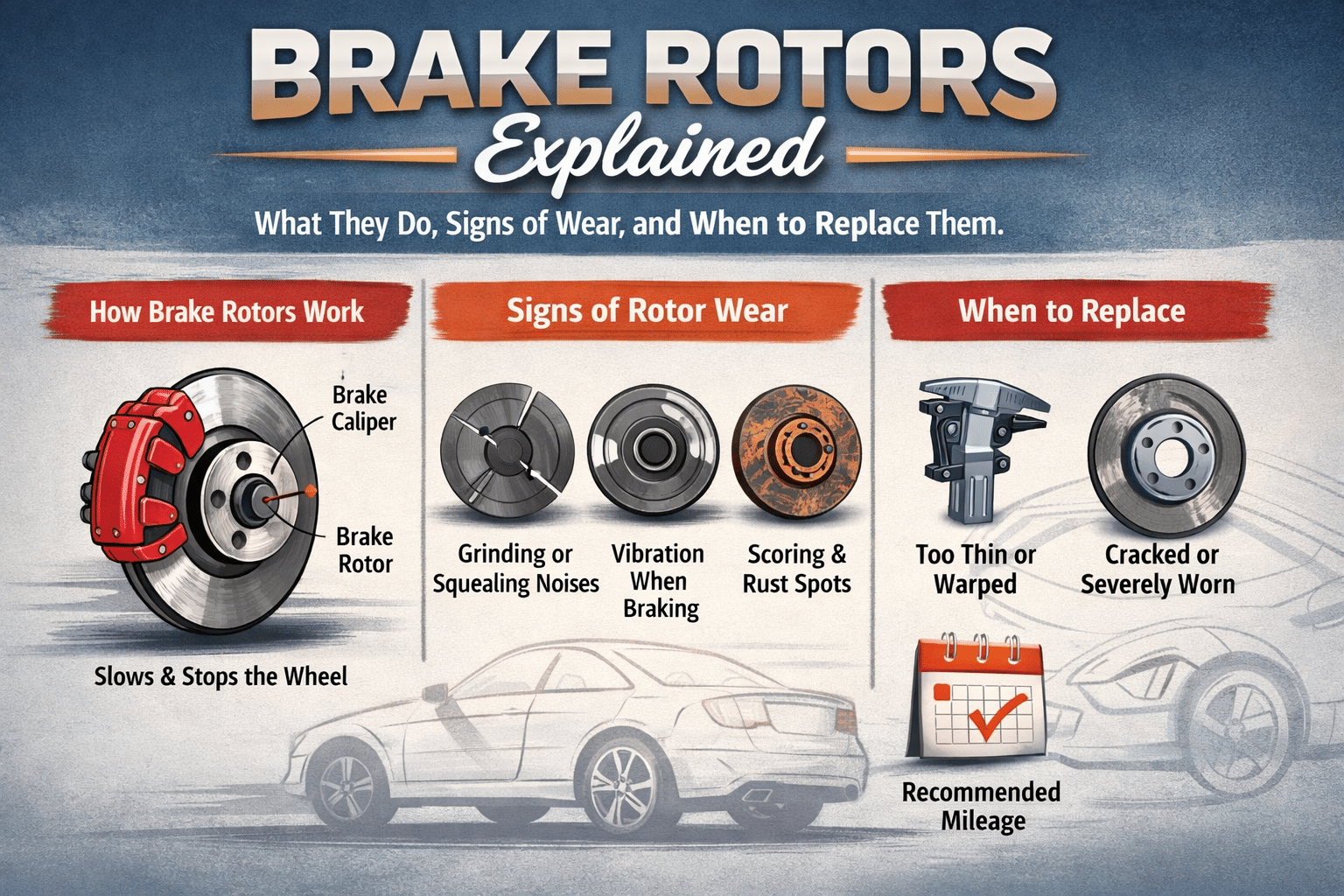
Brake rotors, also known as brake discs, are round metal discs mounted to each wheel hub. When you press the brake pedal, the brake pads clamp down on the rotors, creating friction that slows and eventually stops the vehicle.
For more tips on keeping your car safe, explore our Automotive category, including a post on Brake Pads.
How Rotors Work with Brake Pads
Rotors do not work alone. They operate as part of a system that includes:
- Brake pads
- Calipers
- Fluid
- Master cylinder
- When the brake pedal is pressed:
- Brake fluid transfers pressure to the calipers
- Calipers squeeze the brake pads
- Pads press against the rotors
- Friction slows the wheel rotation
Types of Brake Rotors
Different vehicles use different types of brake rotors depending on performance needs and driving conditions.
| Rotor Type | Description / Features | Recommended |
| Solid Rotors | • Common on smaller or older vehicles | 👉 View Solid Rotors |
| • Simple design | ||
| • Cost-effective | ||
| Vented Rotors | • Most common on modern vehicles | 👉 View Vented Rotors |
| • Internal vents improve heat dissipation | ||
| Drilled Rotors | • Holes help reduce heat and water buildup | 👉 View Drilled Rotors |
| • Often used in performance vehicles | ||
| Slotted Rotors | • Grooves help remove brake dust and gas | 👉 View Slotted Rotors |
| • Better braking under heavy use |
Signs Your Brake Rotors Are Worn or Damaged
- Brake rotors wear out gradually, but ignoring warning signs can lead to unsafe braking. Common symptoms include:
- Vibrations or pulsation when braking
- Grinding or scraping noises
- Visible grooves on the rotor surface
- Steering wheel shaking
- Longer stopping distances
Learn more about the Signs Your Brakes Are Failing.
When Should Brake Rotors Be Replaced?
Brake rotors don’t always need replacement at the same time as brake pads, but they should be checked during every brake service.
General guidelines:
- Brake pads: 30,000–70,000 miles
- Brake rotors: 50,000–100,000 miles
⚠ Important nuance:
These are averages, not guarantees.
Rotors must be replaced if they:
- Fall below minimum thickness
- Become warped
- Develop cracks or deep grooves
Learn more about the automotive safety or maintenance authority explaining brake inspections.
Can You Drive with Bad Brake Rotors?
Driving with worn or warped brake rotors is dangerous. Poor rotors reduce braking efficiency, increase stopping distance, and can cause uneven braking that affects vehicle control.
Learn more about the automotive safety or maintenance authority explaining brake inspections.
Brake Rotors vs Brake Pads: What’s the Difference?
Although they work together, brake rotors and brake pads serve different roles:
Brake Pads Brake Rotors
Wear faster Wear slower
Friction material Metal disc
Lower cost Higher cost
Press against rotors Absorb braking heat
Final Thoughts
Brake rotors are a vital part of every vehicle’s braking system. They provide the surface needed for brake pads to slow your vehicle and help manage the intense heat created during braking. Regular inspections and timely replacement can improve safety, extend brake pad life, and reduce long-term repair costs.
Disclaimer: This article is for general informational purposes only and does not replace professional mechanical advice.
Leave a Reply