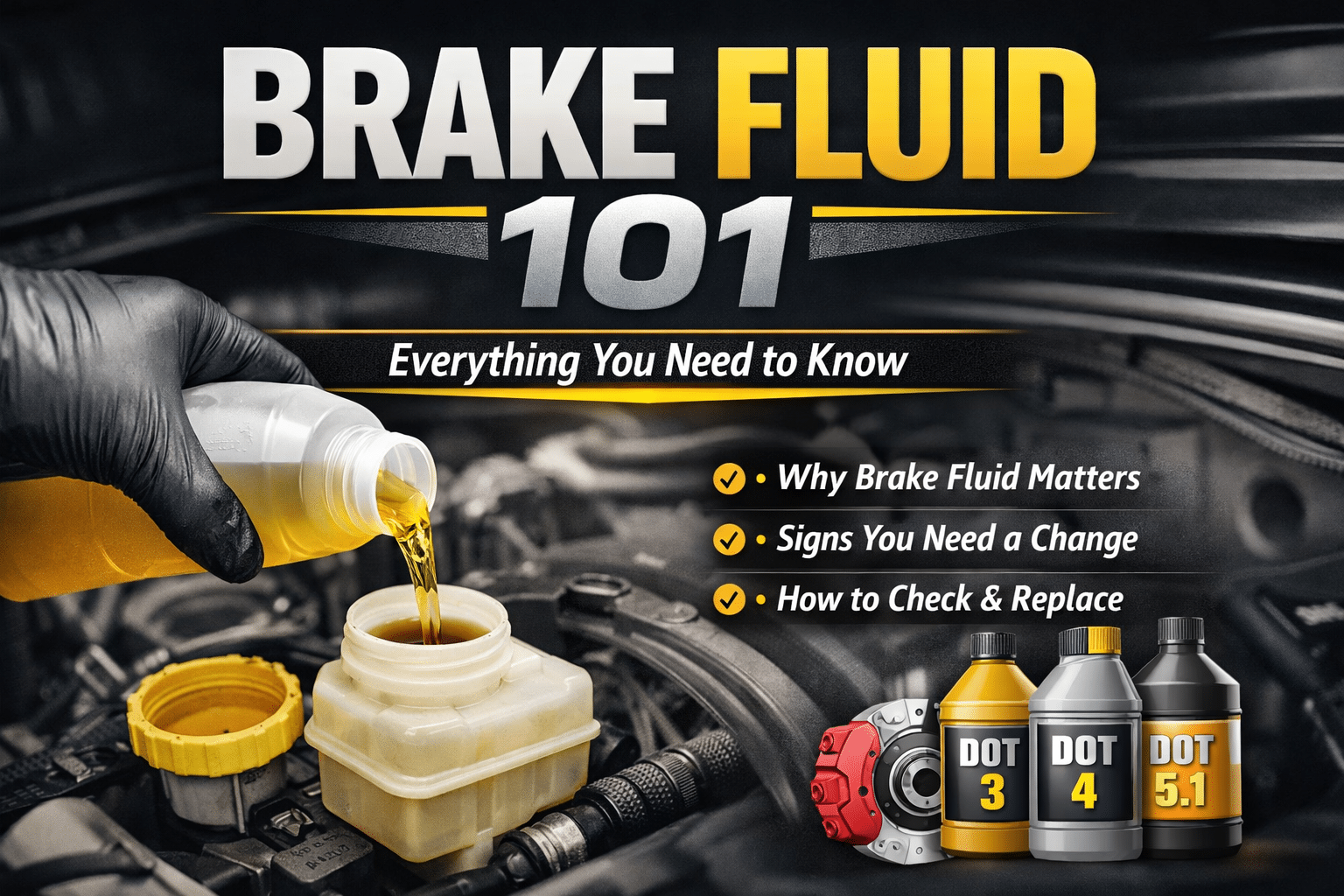
Brakes are one of the most critical components of your vehicle, and at the heart of every braking system is fluid that makes them work effectively. In this post, we’ll cover Brake Fluid 101 — explaining what it is, the types available, and how to maintain it properly. Understanding this can save you from costly repairs and keep you safe on the road.
What is Brake Fluid 101?
Brake fluid is a special hydraulic fluid that carries the force from your brake pedal to your vehicle’s braking system. Every time you press the pedal, the fluid travels through brake lines, activating calipers or drum brakes to slow down or stop your wheels.
Think of brake fluid as the “lifeblood” of your braking system. Just as your body relies on healthy blood, your brakes rely on clean, properly filled fluid to perform safely and effectively.
For optimal braking performance, make sure your vehicle uses high-quality brake pads and rotors that work seamlessly with your brake fluid.
Types of Brake Fluid
Brake fluids are categorized by DOT ratings. Each type has specific properties, especially boiling points, which affect performance.
DOT Type Boiling Point (Dry/ Wet) Notes Buy/ Recommended
DOT 3 205°C / 140°C Common in older vehicles; glycol-based 👉 View DOT 3 brake fluid
DOT 4 230°C / 155°C Standard for modern cars 👉 Shop DOT 4 brake fluid
DOT 5 260°C / N/A Silicone-based; not compatible with DOT 3/4 👉 See DOT 5 silicone brake fluid
DOT 5.1 270°C / 180°C High-performance; compatible with DOT 3/4 👉 Buy DOT 5.1 brake fluid
Pro Tip: Always check your vehicle manual before switching brake fluid types. Using the wrong type can damage seals and reduce braking efficiency. Learn more
Why Maintenance Matters
Most brake fluids are hygroscopic, meaning they absorb moisture from the air over time. Moisture in the brake system can lower the fluid’s boiling point, causing brake fade and corrosion.
Signs You Need Brake Fluid Maintenance:
Spongy or soft brake pedal
Increased stopping distance
Brake warning light on the dashboard
Dirty or dark brake fluid in the reservoir
Maintenance Tips:
Check your brake fluid regularly through the master cylinder reservoir.
Replace brake fluid every 2–3 years, or as recommended by your vehicle manufacturer.
Avoid mixing different types of brake fluids unless they are compatible.
Dispose of old brake fluid responsibly—don’t pour it down drains. “Learn how to check and safely replace your brake fluid”
Safety First
Brake fluid is essential for safe driving, and neglecting it can lead to brake failure. Always use brake fluid from a reputable brand, keep it clean, and follow your vehicle’s recommended maintenance schedule.
External Link Suggestion: You can link to authoritative sites for more safety information, e.g., NHTSA’s brake safety guide or similar.
Pro Tip: When topping up or changing brake fluid, always use a clean funnel and avoid letting contaminants enter the system.
Brake Fluid 101 Conclusion
Brake fluid might seem like a small part of your car, but it’s critical to your safety. Knowing the types of brake fluid, performing regular maintenance, and understanding safety precautions ensures your braking system works efficiently. Shop Quality Brake Fluid in Our Automotive Section!
Leave a Reply